



Introduction
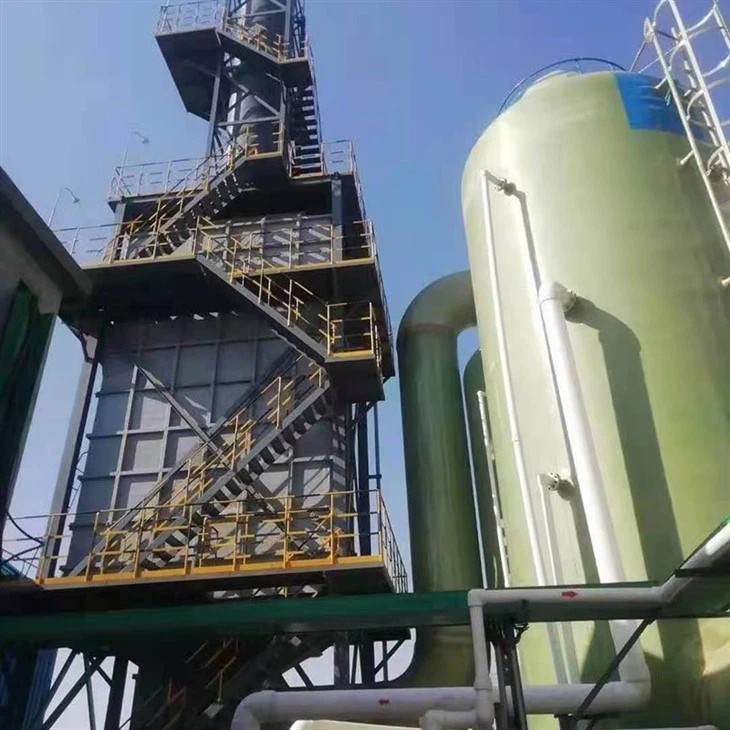
Wet electrostatic precipitators (WESPs) are highly effective devices for controlling industrial PM2.5 emissions, and have been widely used in power plants and the chemical industry. The application of wet electrostatic precipitators is common. Arranging wet electrostatic precipitators after limestone-gypsum flue gas desulfurization systems can effectively capture PM2.5, SO3, mercury and oxides, and can effectively solve problems such as gypsum rain, blue smoke, and secondary particles. The air pollution control effect has been widely recognized by industry experts.
Working principle:
Water mist is sprayed onto the discharge electrodes and the corona zone. The water mist collides, connects, adsorbs, and coagulates inside the strong corona field formed by the needle electrode, jointly capturing dust particles, and finally the dust particles are driven by the electric field force to reach the dust collection electrode and are captured. Water forms a continuous film on the dust collection electrode, washing the captured dust to the bottom of the device and discharging it with water.

Technical features:
Wet electrostatic precipitators have good removal effects on acid mist, toxic heavy metals, and PM10, especially fine PM2.5 dust. Wet electrostatic precipitators can be used to control SO3 acid mist and have the prospect of joint removal. According to research and application of wet electrostatic precipitators abroad, arranging wet electrostatic precipitators after limestone-gypsum flue gas desulfurization can effectively remove pollutants such as dust, SO3, mercury, and oxides in flue gas.
Hot Tags: deep wet electrostatic precipitator, China deep wet electrostatic precipitator manufacturers, suppliers, factory, Wet Dust Collector, bag filter dust collector, ceramic membrane filters at high temperature, Vortex Dust Collector, ridgid vacuum filter bag, Micro Porous Ceramic Membrane Filtration Tube