

Gas equipment plays a crucial role in various industries, providing a reliable and efficient source of energy for a multitude of applications. As a leading gas equipment supplier, I have had the privilege of working with a diverse range of clients across different sectors. In this blog post, I will delve into the common types of gas equipment that are widely used in the market, offering insights into their features, applications, and benefits.
1. Gas Cylinders
Gas cylinders are perhaps the most recognizable form of gas equipment. They are used to store and transport various gases, such as oxygen, nitrogen, acetylene, and carbon dioxide, in a compressed or liquefied state. These cylinders come in different sizes and pressures to meet the specific needs of different applications.
- Features: Gas cylinders are typically made of high - strength steel or aluminum, ensuring durability and safety. They are equipped with valves and regulators to control the flow and pressure of the gas.
- Applications: They are used in a wide range of industries, including healthcare (for medical gases), welding and cutting (for acetylene and oxygen), food and beverage (for carbon dioxide in carbonation), and laboratory research.
- Benefits: Gas cylinders provide a convenient and portable source of gas. They can be easily transported to different job sites or used in locations where a continuous supply from a pipeline is not available.
2. Gas Manifold Charging Station
A Gas Manifold Charging Station is an essential piece of equipment for managing the supply of gas from multiple cylinders. It allows for the simultaneous use of several gas cylinders, providing a continuous and stable gas supply.
- Features: These stations consist of a manifold, which is a set of pipes or tubes that connect multiple cylinders together, and valves and regulators to control the gas flow. They can be designed for different gas types and cylinder configurations.
- Applications: Gas Manifold Charging Stations are commonly used in industrial settings where a large volume of gas is required, such as in manufacturing plants, refineries, and large - scale commercial kitchens.
- Benefits: They enhance the efficiency of gas usage by reducing the need for frequent cylinder changes. Additionally, they improve safety by providing a centralized and controlled gas supply system.
3. Electric Heating Water Bath Vaporize
Electric Heating Water Bath Vaporizers are used to convert liquefied gases into a gaseous state. They are particularly useful for gases that are stored in a liquid form at low temperatures.
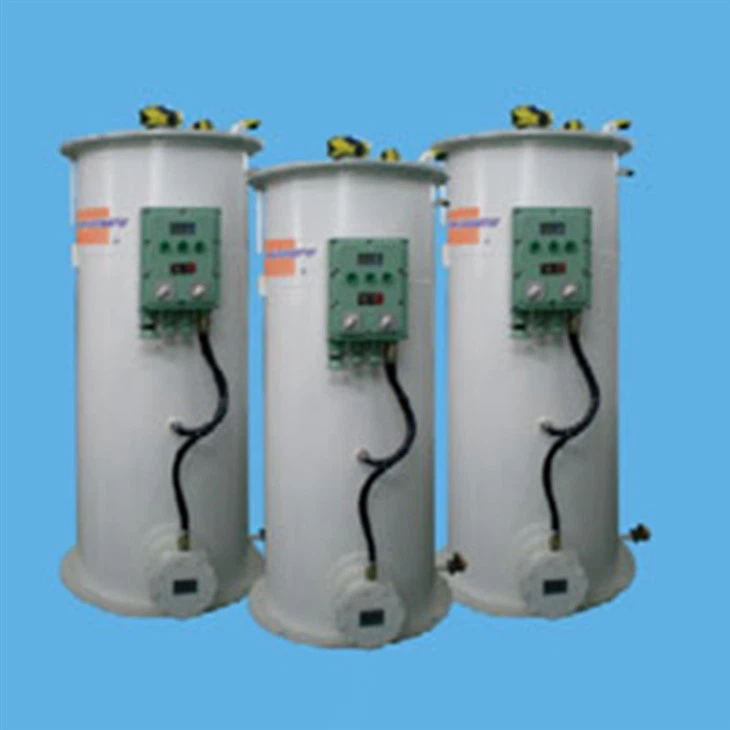
- Features: These vaporizers consist of a water bath heated by an electric element. The liquefied gas is passed through coils or tubes immersed in the water bath, where it absorbs heat and vaporizes. They are equipped with temperature control systems to ensure a stable and safe vaporization process.
- Applications: They are widely used in industries such as healthcare for the vaporization of liquid oxygen, in metal fabrication for the vaporization of liquid nitrogen, and in the chemical industry for the vaporization of various liquefied gases.
- Benefits: Electric Heating Water Bath Vaporizers provide a reliable and efficient way to vaporize liquefied gases. They are easy to operate and can be adjusted to meet different vaporization requirements.
4. Gas Regulators
Gas regulators are essential for controlling the pressure of gas as it is released from a cylinder or other gas source. They ensure that the gas is delivered at a safe and consistent pressure for the intended application.
- Features: Gas regulators typically have an inlet for connecting to the gas source, an outlet for delivering the gas to the equipment, and a pressure adjustment mechanism. They can be designed for different gas types and pressure ranges.
- Applications: Gas regulators are used in a variety of applications, including domestic cooking appliances, industrial furnaces, and laboratory equipment.
- Benefits: By maintaining a stable gas pressure, gas regulators prevent damage to equipment and ensure the safety of users. They also help to optimize the performance of gas - powered appliances by providing the right amount of gas at the appropriate pressure.
5. Gas Proportioning Cabinet
A Gas Proportioning Cabinet is used to mix different gases in precise proportions. It is commonly used in applications where a specific gas mixture is required.
- Features: These cabinets are equipped with sensors, valves, and controllers to measure and regulate the flow of each gas component. They can be programmed to achieve different gas mixtures according to the user's specifications.
- Applications: Gas Proportioning Cabinets are used in industries such as semiconductor manufacturing, where precise gas mixtures are required for processes like chemical vapor deposition, and in environmental testing laboratories, where specific gas mixtures are needed to simulate different atmospheric conditions.
- Benefits: They provide accurate and repeatable gas mixtures, which is crucial for the quality and consistency of industrial processes. They also improve safety by ensuring that the gas mixtures are within the safe operating range.
6. Gas Detectors
Gas detectors are used to monitor the presence and concentration of gases in the air. They are an important safety device in environments where the leakage of gases can pose a risk to human health and safety.
- Features: Gas detectors can use different sensing technologies, such as electrochemical sensors, infrared sensors, and catalytic sensors, to detect various types of gases. They are usually equipped with alarms that alert users when the gas concentration exceeds a certain threshold.
- Applications: They are used in industrial facilities, commercial buildings, and residential areas. For example, they are used in factories to detect the leakage of toxic or flammable gases, in restaurants to monitor the presence of natural gas, and in homes to detect carbon monoxide.
- Benefits: Gas detectors help to prevent gas - related accidents by providing early warning of gas leaks. They also contribute to the overall safety and well - being of workers and residents in the area.
7. Gas Burners
Gas burners are used to convert the chemical energy of gas into heat energy. They are a key component in many heating and cooking applications.

- Features: Gas burners come in different designs, such as atmospheric burners, power burners, and infrared burners. They can be adjusted to control the flame size and intensity, and they are often equipped with ignition systems for easy startup.
- Applications: Gas burners are used in a wide range of applications, including domestic stoves and ovens, industrial furnaces, boilers, and water heaters.
- Benefits: Gas burners offer high - efficiency heating, with the ability to quickly reach and maintain the desired temperature. They are also relatively clean - burning compared to some other fuels, which reduces emissions and environmental impact.
As a gas equipment supplier, I understand the importance of choosing the right gas equipment for your specific needs. Whether you are a small - scale business looking for a reliable gas supply for your kitchen or a large industrial corporation in need of advanced gas management systems, I can provide you with high - quality gas equipment and professional advice.
If you are interested in learning more about our gas equipment products or wish to discuss your specific requirements, please feel free to contact me. I am dedicated to helping you find the optimal gas equipment solutions that will meet your performance, safety, and cost - effectiveness needs.
References
- "Handbook of Gas Equipment Technology", published by Industrial Gas Association.
- "Gas Safety and Applications", a research report from the National Institute of Standards and Technology.
- "Gas Equipment for Modern Industries", an article in the International Journal of Gas Engineering.